Why should your company implement multi-factor authentication now?
With over two decades dedicated to the field of information security, I’ve witnessed various scenarios ranging from simple password theft to sophisticated attacks targeting corporate data. In a recent meeting, I heard something that stuck with me: “Today, any password can be discovered. But how you protect that access can change everything.” And it’s precisely this change I want to discuss: multi-factor authentication.
What is multi-factor authentication and why has it never been more important?
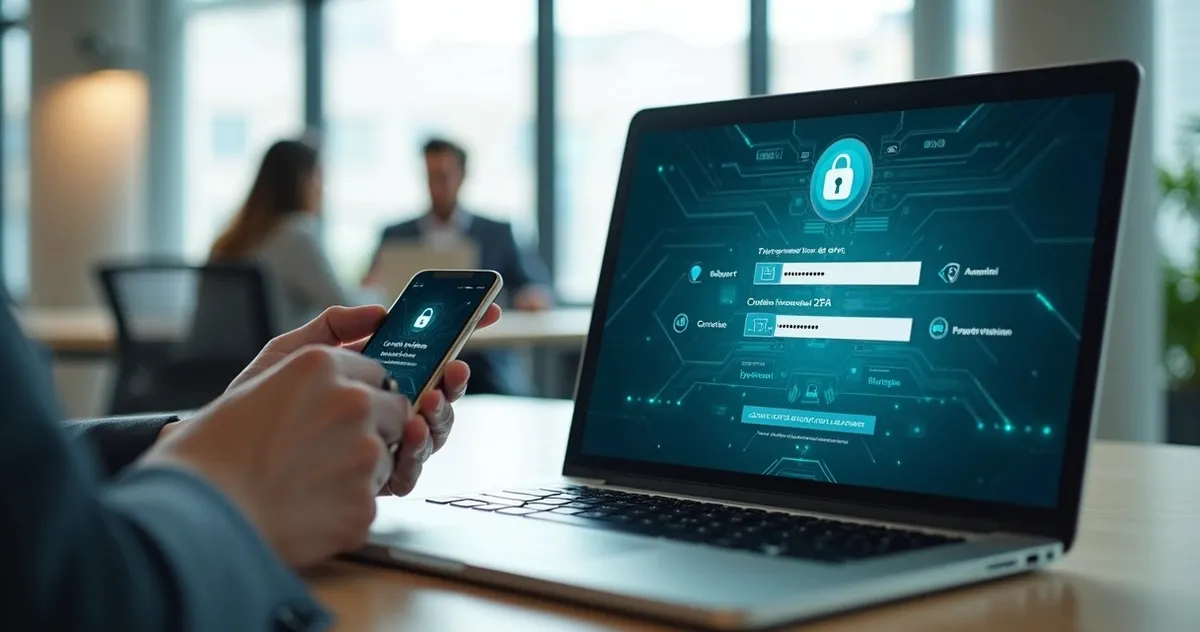
I often receive questions about what this extra layer of protection truly means. Multi-factor authentication, or simply MFA (short for Multi-Factor Authentication), emerged from the real need to elevate digital security beyond traditional passwords. In practice, instead of relying solely on a password, MFA requires additional verification—something you have (like a mobile phone), something you are (like a fingerprint), or something you know (like an additional PIN).
Adopting MFA is no longer a differentiator but a silent urgency.
It all started when I noticed the rise in phishing attacks targeting small businesses. Passwords were always the weakest link. Once discovered, the entire digital environment became vulnerable. With MFA, unauthorized access can truly be blocked. In conversations with Harbor IT’s expert team, I’ve heard accounts of incidents neutralized solely because the second factor was active.
Real benefits for your company
If I had to summarize in a few words, I’d say: peace of mind and loss prevention. But the benefits go further:
- Drastic reduction in invasion risks: even if a password leaks, an attacker still needs to overcome a second barrier
- Enhanced trust in the digital environment: employees can access internal resources, cloud applications, or Microsoft platforms with much greater security
- A culture of shared responsibility: the company fosters security habits within the team
Imagine, for instance, the impact of a financial data breach in your company. I’ve seen managers who only realized the value of effective protection after dealing with the exposure of sensitive information. A single incident can be enough to cause irreversible damage to a business’s reputation.
How does multi-factor authentication work in corporate environments?
The operation of MFA is actually quite simple, despite seeming technical. In the first step, the employee enters their login and password as usual. Then, before completing access, the system requests a second factor from these options:
- Code sent via SMS or email
- Authenticator apps (like Microsoft Authenticator, which we frequently use in Harbor IT projects)
- Biometric verification: fingerprint, facial recognition, or voice recognition
- Physical token (a small device or card)
One of the main concerns I often hear is about user experience. After all, no one wants to complicate access for employees working under pressure. The key lies in balancing security and usability. With certain MFA solutions, verification is quick and intuitive, seamlessly integrating into daily workflows without disrupting operations. In Microsoft environments, integrations are especially smooth.
What changes in IT routines and internal processes?
For IT professionals, like many at Harbor IT, implementing multi-factor authentication is part of the modernization agenda. I always emphasize that no security policy works without team engagement. That’s why I often recommend brief training sessions explaining the reasons behind the change before mass activation of MFA.
Additionally, the company gains access to more comprehensive access logs. This means that if there’s a suspicious attempt, the system quickly alerts the responsible party. I’ve seen cases where this prevented breaches in critical sectors, demonstrating in practice how MFA goes beyond theory.
- MFA becomes an ally in access monitoring and auditing, adding value to Harbor IT’s support services.
Common challenges and how to overcome them
I admit: it’s not uncommon to face resistance when it comes to changing authentication processes. I hear phrases like “but we’ve never had problems” or “another step to remember in daily routines.” In my experience, the biggest challenge is breaking the paradigm. Once this initial barrier is overcome, rarely does anyone want to return to the old password-only system.
By showcasing good examples, I often present results of increased agility after adopting MFA. Additionally, when the team realizes this strategy deters external attempts and generates real-time alerts, fear turns into confidence. Modern equipment and platforms, like those implemented by Harbor IT, facilitate acceptance and make the process more practical.

Integrating MFA with other technological solutions
In the consulting work I do with Harbor IT, I always emphasize that MFA is one of the pillars of a comprehensive security infrastructure. It works hand-in-hand with firewalls, network segmentation, access policies, and collaborative voice and video solutions. Its role in the company’s digital daily operations is to block unauthorized access without hindering productivity.
Want to further enhance your protection? Integrating MFA with segmented network environments and centralized authentication systems is an approach I’ve seen grow, especially in contexts where employee mobility demands secure remote access.
Considering cost-effectiveness
The question of cost often arises. In my opinion, the question should be reversed: “How much does it cost not to protect your company?” I’ve seen medium-sized businesses lose not only money but credibility for failing to invest in basic security.The major advantage of MFA lies in its affordable cost compared to its risk mitigation potential. Many solutions can be integrated into existing systems, reducing budgetary impact.
For companies already running projects, like those at Harbor IT, multi-factor authentication integration is planned and executed without major disruptions. This makes the process less costly and more strategic.
For those who like to stay updated, explore other security topics. Dive deeper into this discussion in our articles on secure routines, internal security and prevention technologies. If you’re looking for something more specific, conduct a personalized search.
Conclusion: Is it worth implementing MFA now?
If I could advise any manager or IT professional, I’d say implementing multi-factor authentication today is the most reliable step to protect data, reputation, and peace of mind. In times of constant threats, relying solely on passwords no longer makes sense.
With the right team, like ours at Harbor IT, implementation becomes quick, effective, and tailored to the size and profile of your business. Don’t wait for an incident to make this decision. Contact us and discover how we can transform your company’s digital security.
Frequently Asked Questions About Multi-Factor Authentication
What is multi-factor authentication?
Multi-factor authentication (MFA) is a security method that requires two or more forms of verification to ensure that only authorized individuals can access systems and information. These forms can combine something you know (like a password), something you have (a mobile phone or token), and something you are (like a fingerprint, for example).
How does multi-factor authentication work?
In the MFA process, the user enters their login and password as usual. Then, they must confirm their identity using another factor, which could be a code sent to their phone, an authenticator app, or even biometrics. This way, even if one credential is discovered, unauthorized access is blocked by the extra factor.
Why use multi-factor authentication in your company?
Using multi-factor authentication in your company reduces the risk of breaches and data leaks. It makes access more controlled and logs suspicious attempts.Additionally, it demonstrates the company’s proactive stance in protecting its information and builds trust with clients and partners.
Is multi-factor authentication really secure?
Yes, multi-factor authentication is considered one of the best defenses against cyberattacks and virtual scams.It significantly reduces the chances of successful attacks because it forces the attacker to overcome multiple obstacles in a single attempt. For this reason, it’s recommended by security experts and international organizations.
How much does it cost to implement multi-factor authentication?
The cost can vary depending on the company’s size, number of users, and required integrations.Generally, it’s considered a low-cost investment compared to the impact of a data breach. For projects carried out by Harbor IT, costs are tailored to the client’s environment, aiming for the best balance between protection and practicality.